
WUCHANG: Fallen Feathers Review


Pros
- Great environments and level design
- Solid narrative and voice acting
- Huge amount of build variety
Cons
- Bad hit telegraphing at times
- Inconsistent enemy strength
- NPC questlines that can be easily broken
- Convoluted and complicated collection of upgrade systems
- Too many stats and upgrades to keep track of
Maybe Soulslikes need to take a break. The genre has exploded over the last five or so years, and I feel like things are starting to stagnate, as entries pop up that feel like they fall flat upon playing despite how cool they look in trailers and gameplay. Wuchang: Fallen Feathers is one of those games. Everything here theoretically fits together to create a by-the-numbers Soulslike that doesn’t feel like it has its own spin on combat that goes beyond what you can experience elsewhere.
But, there are SO many choices that just drag down the whole experience, convolute progression and upgrades, and even break the game at points (in a bad way). Wuchang has got a lot of the same teething problems that Black Myth: Wukong had last Summer. There are core parts of it that work really well, but entire sections of the game just feel like they haven’t been crafted in a robust and well-thought-out way.
Fleeing the Feathering
You play as the titular Wuchang, who wakes up in a cave unable to remember anything. The opening is very classic for the genre. Upon waking, you head out into the world and have to find your way around. There is very little hand-holding going on here, and while the opening is limited in scope, there isn’t much to direct you or tell you what to do.
Quickly, you realize that Wuchang has a horrific Feathering disease, which turns you into a deranged maniac or a bloodthirsty abomination. It feels extremely inspired by Bloodborne’s Beast Scourge, but with a strong Asian inspiration behind it.

Wuchang awakes to find herself with the mysterious feathering disease.
This is one area where Wuchang stands out. Even basic grunts have a great visual style and inspiration that I enjoyed. The world-building with the Feathering disease and the character models and artistic choices help to give a lot of identity to the world you are exploring.
It has a larger effect on gameplay, too, which we will discuss further on, but Wuchang is constantly fleeing this disease as the more they die, the more insane they become, resulting in hallucinations and some additional gameplay options.
On your journey, you will meet a variety of characters and NPCs with pretty deep and complex questlines that go beyond a lot of other entries in the genre. At the same time, you are attempting to rediscover your memories and remember your past.
But this is where Wuchang runs straight into its first hurdle. For some reason, the decision was made to let you choose to do the second or third chapters in any order, which quite literally breaks a significant number of the character questlines if you do chapter three before chapter two.
It’s quite literally an insane problem for the game to have, and a massive self-inflicted wound. This choice could have just been removed completely, but instead, players could just end up kneecapping themselves unintentionally.

Why this chapter choice was kept in the game is baffling to me.
Thankfully, the voice acting and writing here are great, and it plays a key role in heightening the impressive world-building established elsewhere.
Combat Conundrums
Wuchang’s combat is a complicated experience. There is a lot to like here, but yet again, there are some key stumbles it makes that just make it drag and feel like you are fighting against bullet sponges rather than enemies with complex and deep movesets.
The game feels close to what FromSoftware creates with their enemy encounters. There is a good mix of single enemies, grunts, larger groups, tougher enemies alongside paths to explore, and mini-bosses or challenging foes to try and tackle as you explore the weaving and windy areas across the game’s chapters.

You’ll come across many different types of weapons in Wuchang, like the Dual Blades.
The variety of weapons here is also impressive, and each one comes with an expansive moveset and an even more expansive upgrade tree and system that can deepen their moveset even more, although some of these individual attacks consist of several swings of your weapon and feel too long. You have swords, dual swords, axes, spears, and more to choose from, and the customization options visually for Wuchang and her weapons are incredible. The team definitely understood the assignment on this front.
Each weapon can use one of two abilities by earning Skyborn Might. This is a passive buff resource that is earned by attacking, dodging at the right time, performing specific moves, and more. You can increase the amount of Skyborn Might you earn or earn it in new ways by unlocking upgrades for each weapon type.
These abilities range from charged aerial attacks to deflects that can negate any damage for several seconds to powerful flurries and are a key part of the dance that Wuchang’s combat becomes. They almost always played a role in my victories against tougher enemies, especially the challenging Feathering bosses that can randomly spawn if you are afflicted by the disease enough.

The enemy design in WUCHANG can be incredible to behold at times.
These are similar to the invader enemies you find in FromSoftware games in terms of difficulty. Upon death, a Madness Demon can spawn directly next to where you respawn (or where you died) and can provide an immediate challenge. But they are extremely difficult, which means after dying and losing your Red Mercury (Souls), you may lose it all again by dying to them. So, while a challenge, they are also oftentimes a pain to deal with and just get in the way of you progressing.
They aren’t the only bullet-sponge-like enemies, however. The game is littered with them, and there is a distinct lack of consistency when it comes to what will take an age to kill and what will die in a few hits. At times, it felt like I was just spending way too long progressing through areas because of this, and the poor placement of Shrines (rest points only made it worse). It can also be really hard to see what attacks enemies are performing at times, with bad telegraphing.
Wuchang also suffers from a really potent lack of Poise on enemies. Enemies will just attack through your attacks constantly, even small grunts. It was just insanely frustrating as I was often getting clipped by attacks that I thought wouldn’t hit me because I would overpower them. The problem runs rampant throughout the entire game and never really goes away. It’s just another huge barrier that slows down level progression and makes the game feel hard in an unfair and unsatisfying way.
Again, it’s a solid combat framework, but there are a lot of gripes I had with it along the way that just felt like they were padlocking the fun away.

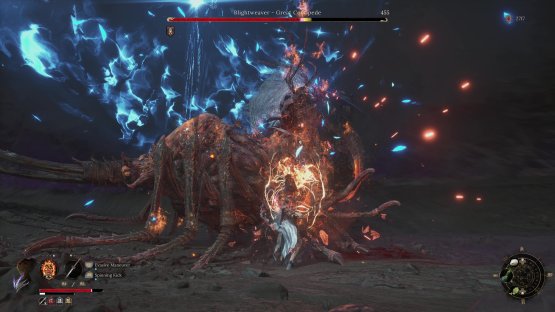
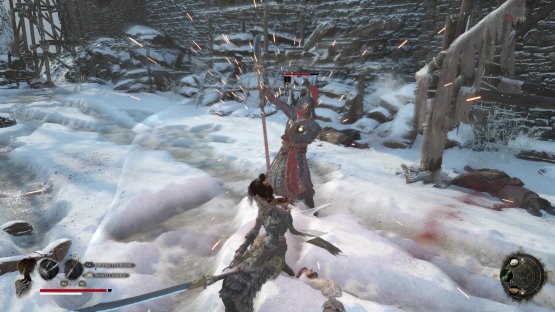
(1 of 2) There are many spells for you to play around with in WUCHANG.

There are many spells for you to play around with in WUCHANG. (left), Alternatively, equip a Longsword and work on parrying their attacks. (right)
Let’s Start Simplifying Things
Unfortunately, much like the rest of Wuchang: Fallen Feathers, the entire upgrade systems, items, consumables, and stats feel almost untrackable and unmanageable because there are so many variables.
There are four ways to upgrade and enhance your weapons in the game, which all offer slightly different, but not drastically different stat upgrades, move changes, and discipline alterations. It’s just excessive, and one or two systems that were better focused or felt less sprawling would have been better here.
As an example, when you want to use the main upgrade tree, you have to spend Red Mercury to invest in individual skills, which can be done repeatedly. Investing enough Red Mercury, then allows you to get some Red Mercury Essence which allows you to buy entirely new skills you haven’t invested in yet. Why this isn’t just done with Red Mercury, I do not know. On top of that, there is a whole collection of spells that can be used in combat and changed as you go.

There are many different skills you can purchase in WUCHANG.
Wuchang has basic stats which are increased as you buy new skills, but they also have specializations such as “strength”, “agility”, “magic”, and “feathering” which appear to upgrade alongside her other stats. There are 16 different attack and defense stats that change based on your armor, weapons, and upgrades. Finally, there are seven different types of elemental effects that can be equipped with weapons or dealt as damage by enemies, with Wuchang having separate defense resistances against them, on top of the existing eight.
It’s all just too much, and while it does allow for an impressive amount of build variety, it also all becomes stuff on top of stuff on top of stuff that you can’t discern properly or effectively as you play. Everything just gets lost in the sauce. It is so easy to lose track of terminology, upgrade effects, what moves you have for each weapon, and stats, although you can find an in-game Help menu which can jog your memory if needed.

This screen simply has too much to keep track of.
Armor and customization options don’t seem to change these stats in any way that feels like there is rhyme or reason. Instead it’s like piecing together a jigsaw of equipment that you think will work for the area or enemies you are coming up against.
It’s just too sprawling and while others I have spoken to and the rest of the Gamer Guides team really enjoyed the customization and flexibility on offer, I just ignored it all as I played and brute forced my way through encounter after encounter with a weapon or set-up I liked. I never felt encouraged to experiment or buildcraft because it is so unapproachable. Fortunately, for those that do enjoy that approach, the game does offer free respecs at any time whenever you’re at a Shrine.
At the end of the day, that is where I am at with Wuchang. As someone who has played more Soulslikes than what is probably healthy, it feels like there is little here that isn’t better somewhere else. While functional, it’s got a lot of teething problems that could potentially be ironed out, but I am starting to think the genre needs to calm down or look at itself more closely and see what actually needs fixing or changing before making those alterations.
Functional But Frustrating
Wuchang: Fallen Feathers is a sprawling game for better and for worse. It has a lot to like: story, art design, and environment-wise. But it comes with a lot of combat caveats and an upgrade and progression system that just doesn’t know when to stop expanding and complicating things.
Gameplay:
Sound:
Graphics:
Story:
Value Rating:

No Comments