
 First Impressions
Feathered Nightmare



Pros
- Huge build variety
- Interesting characters
- Skyborn Might system encourages risk vs reward gameplay
- Exhilarating boss battles
Cons
- Can be long stretches between checkpoints
- Dodge timing takes some getting used to
- Can be difficult to heal during boss battles
These days, Soulslikes are plentiful, and while that may be true, not all of them hit with the same level of quality as the trendsetters at From Software. As a big fan of Soulslikes myself, I’ve played my fair share of them, so when Gamer Guides was invited to an exclusive hands-on preview of WUCHANG: Fallen Feathers, I naturally jumped at the opportunity. Fortunately, I left the event feeling incredibly optimistic about it and left wanting more.
With an obscenely large blade and a mysterious feathery illness, we take to the era of the late Ming Dynasty to put WUCHANG: Fallen Feathers through its paces.

WUCHANG: Fallen Feathers features some of the better boss battles we’ve fought in quite some time.
Of Pirates and Beasts
Set in the land of Shu during the aforementioned end of the Ming Dynasty, you take control of the titular character, Wuchang, an amnesiac pirate who must recover her memories while dealing with the Ornithropy disease she awakens with. This mysterious illness causes the Feathering, which eventually turns its victims into mindless beasts. Fortunately for both you and Wuchang, you still have your faculties and instead have developed incredible abilities thanks to them.
It doesn’t take too long for the story to get going, and once you awaken, you’ll be introduced to some of the key players, such as the Taoist who is looking to find a cure for this plague. Reverent Temple is the location of your earliest hub, where you’ll meet other people who have interesting tales to share or request you to complete a task for them. Once you’re ready to set off, though, you’re directed to Shu Temple, where you may be able to find more information on your new illness.
It might sound rather simple on paper, but the characters all seem interesting, and many of them task you with either finding a loved one or retrieving an item for them. We’ve been assured by the publisher that WUCHANG: Fallen Feathers features many choices and endings, and we’re betting that a lot of that is tied to the various tasks you can complete. Fortunately, the game will display an icon on the travel menu at Shrines that informs you if there is an update to a character in a specific location.

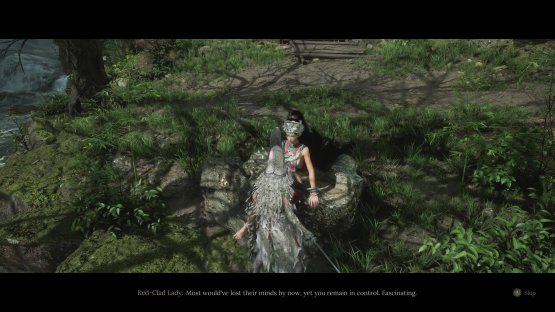
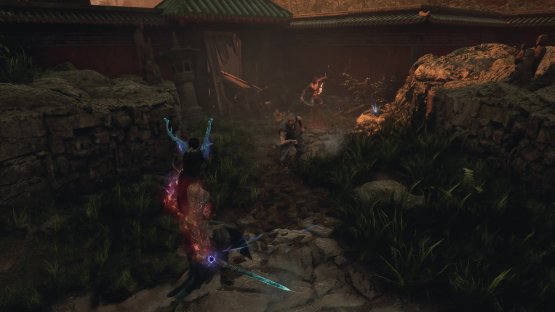
(1 of 2) You’ll meet an interesting cast of characters as you explore the areas in WUCHANG.

You’ll meet an interesting cast of characters as you explore the areas in WUCHANG. (left), Many of the basic enemies you encounter will be humanoid. (right)
Tools of the Trade
WUCHANG: Fallen Feathers has a massive amount of build variety to it, and you can quickly nail down your playstyle from all of the tools the game gives you. There are five different weapon types (Long Sword, One-Handed Sword, Spear, Duals, and Heavy weapons), and you can equip two different weapons at once. Once you’ve acquired at least one Skyborn Might charge (more on this later), you can perform a sheath and weapon change attack that allows you to quickly change between them in devastating style. Each weapon has its own set of skills to unlock from the massive skill tree, and all favor a different playstyle. I was a particular fan of the One-Handed Sword due to an early skill that allowed me to accrue Skyborn Might charges outside of battle, allowing me to use Magic at will. The weapons all have a great feeling to them, too, so you’ll often find yourself switching between them just to see how they play.
…you’ll need to use your Skyborn Might charges, which, by default, you earn by dodging at the last second and thus increasing the risk vs reward gameplay.
Every individual weapon comes with both a skill and discipline, and these are enhanced when you have Skyborn Might charges. The initial Longsword that Wuchang starts with, the Cloudfrost’s Edge, comes with the Dash Strike skill and Sword Counter discipline, and this is just the beginning of how unique weapons can be. Although by nature, you can only dodge in combat, some weapons will give you the ability to time counters and deflections too.
You’ll also gain access to Magic, of which you can equip up to four spells at once. You’ll usually get these as rewards for defeating the various bosses you encounter, and to use them, you’ll need to use your Skyborn Might charges, which, by default, you earn by dodging at the last second and thus increasing the risk vs reward gameplay. In the limited time I played, Magic seemed very strong, and when paired with a One-Handed Sword and the skill mentioned above, I was able to use it frequently.

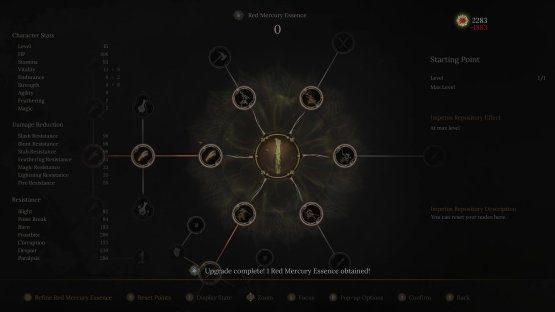
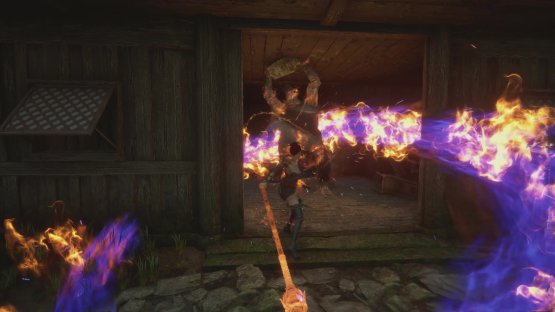
(1 of 2) There is a massive skill tree to make use of in WUCHANG.

There is a massive skill tree to make use of in WUCHANG. (left), Magic seemed particularly powerful during our preview. (right)
These are just some of the tools you’ll have available to you as you plan your playstyle in WUCHANG: Fallen Feathers. Beyond these, you’ll be able to temper your weapons with various elemental effects, a massive number of consumables, Benedictions (think gem sockets for your weapons) that grant passive effects, and a whole host of different armor sets that alter your defenses against the many elements and ailments you’ll encounter. Fortunately, you can respec your skills at any point whenever you’re at a Shrine, encouraging experimentation.
Deadly Locales
WUCHANG: Fallen Feathers’ world is interconnected, packed full of shortcuts and secrets, and seeing as there are many items to locate, this helps to keep your exploration feeling rewarding. You also have a degree of freedom in how you approach it all, while there are specific plot points you must complete to progress through the adventure, you can do some things out of sequence.
For example, during our hands-on, I went a completely different direction than the intended path and ended up fighting an optional boss a lot earlier. Despite being challenging, I took it down and got my hands on a powerful spell that I then used against the next story boss to make it easier. It’s these intricacies that make exploring the world of WUCHANG exciting, even if it’s dangerous, and you can find yourself dying at any moment. Indeed, one of my few complaints in the build that I played is what seemed like long periods of exploration between Shrines, even if there are lots of shortcuts you can open up.
You’re rewarded for taking the time to fully explore these areas, too, as you’ll often find somebody who needs some assistance, an optional path that leads to lucrative upgrades, or even special merchants that can trade you powerful weapons. Despite the lack of a map, the compass does help a little, found at the bottom right of your screen. A yellow arrow will point the way to a nearby person you have a quest update with, while a red arrow will point toward a nearby Shrine you’ve yet to activate.

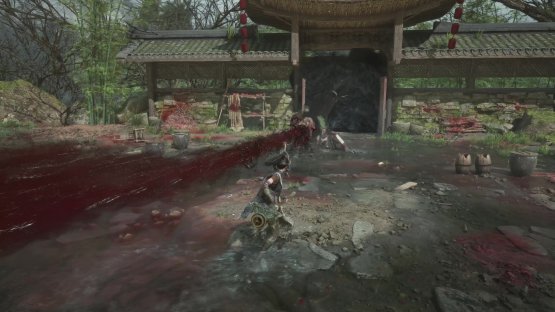
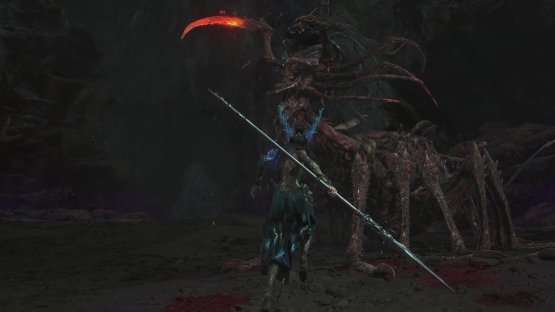
(1 of 2) Many of the bosses will force you to react quickly.

Many of the bosses will force you to react quickly. (left), Learning their patterns is crucial for success. (right)
Brutal Bosses
When it comes to a Soulslike, however, one of the most important questions is the bosses themselves, which usually make up a large portion of your playtime. During our session, I got to fight three bosses in the earlier portion of the game, with another near the end of the game’s first chapter, and I came out of all of them with high praise.
…the boss battles are beautiful dances of carnage that really bring out the best in any build…
The first three were all battles against humans who were not as fortunate as Wuchang and succumbed to the illness, being transformed into grotesque monstrosities. As has become a norm by now, you’ll fight these bosses usually over two phases, and every single one of them was agile, meaning you’ll need to be on top of your dodging game if you want to take them down.
Perhaps the highlight of them all, however, was the boss near the end of the first chapter, a human-based battle. These are often my favorite types of battles in Soulslikes, and it’s simple to say, I was a big fan of how it played out in WUCHANG: Fallen Feathers. The skillset you have available to you in these battles make them a brilliant exchange of blows and last-second dodges that really do test your understanding of the combat system.

The battle against the humanoid boss was our standout moment in the preview, and one of our favorite bosses in a long time.
One little nitpick I had with the bosses is that due to the relentless nature of them, it can be difficult to find moments to heal yourself, often causing me to lose an encounter while still having the majority of my flasks available to use. Once it clicks, though, the boss battles are beautiful dances of carnage that really bring out the best in any build you may have created to that point, and what’s more, you’re often rewarded with new spells or equipment upon your victory. One such boss I was able to kill quickly after working out that a particular spell I had was effective against it; I then leaned into that playstyle to take it down without too much fuss.
I only had access to a small slice of WUCHANG: Fallen Feathers, but I was already sold on what I played, and it was refreshing to play a Soulslike that gave me so much flexibility on how to approach every combat encounter. If WUCHANG can live up to the early hours and nail the choices and endings that we’ve been assured of, we could be looking at something rather enjoyable here.
Feathered Nightmare
WUCHANG: Fallen Feathers offers a massive degree of flexibility in how you approach its hostile world. From a large selection of weapons, magical spells, and a massive skill tree, there’s enough here for every kind of Soulslike player that gets us interested for what’s to come.
Gameplay:
Sound:
Graphics:
Story:

No Comments